

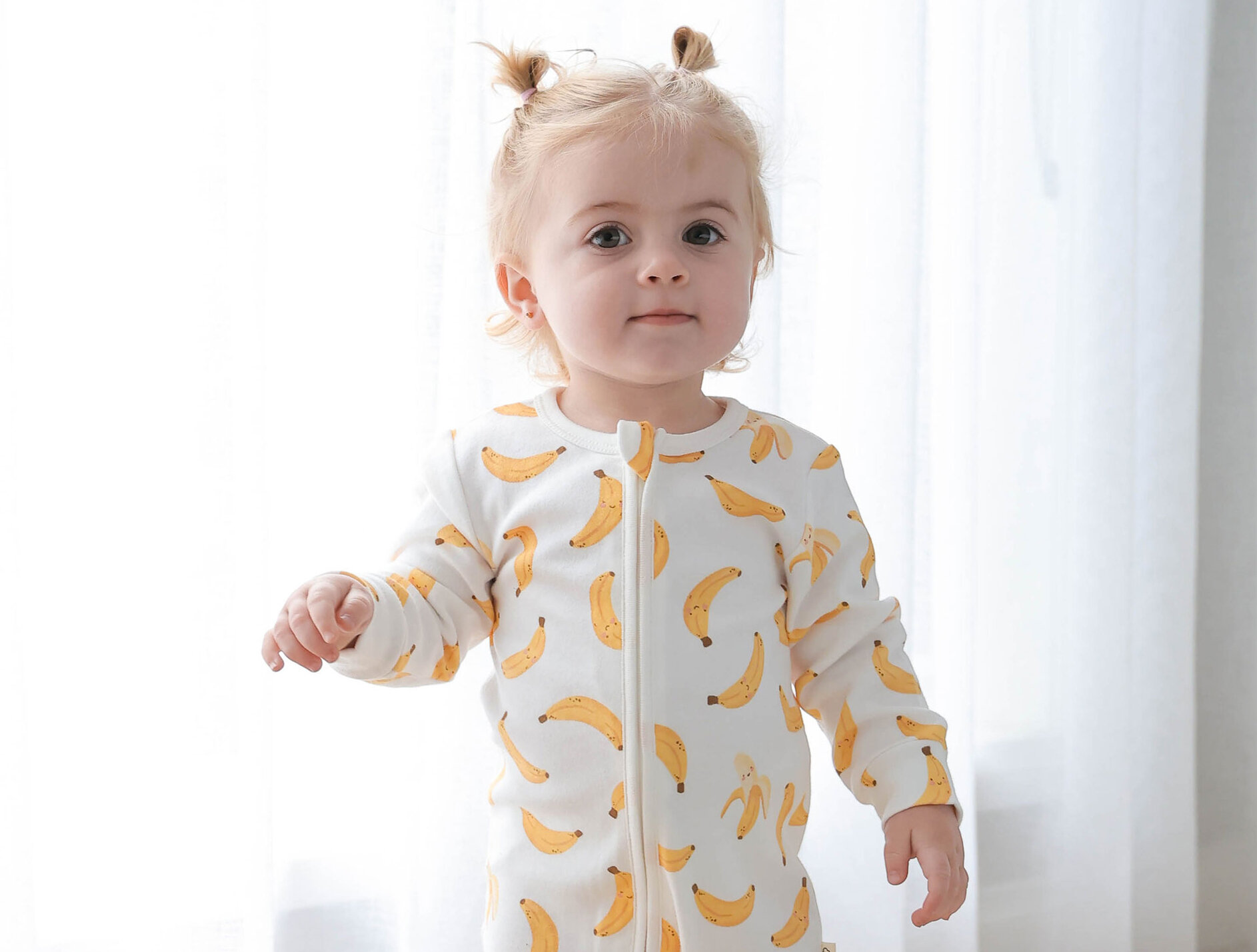
If you are building a newborn wardrobe, baby onesies are usually the pieces you’ll reach for every day. They work for naps, feeds, pram walks, tummy time, and repeated nappy changes throughout the day.
A good onesie does not need complicated styling to be useful. It needs to be soft, breathable, easy to open, and comfortable enough for long wear. For many families, one well-made style can handle most of the first few months.
In this blog post, you’ll find:
- Why onesies have become a daily essential
- What features matter most in real-life use
- Organic cotton vs bamboo vs waffle: how to choose
- A practical sizing and quantity plan
- Three Lūmmi onesies to add to your shortlist
Why Onesies Become a Daily Essential
A baby onesie is a one-piece outfit that covers the torso and legs. It’s a simple design, but it helps with several common challenges new parents face.
- It stays in place better than separates. Tops don’t ride up as easily, and little tummies stay covered when babies kick and wriggle.
- It makes dressing quicker and simpler. One piece is much easier than pairing tops and bottoms, especially during overnight changes.
- It layers well. In cooler weather, you can easily add a cardigan, swaddle, or sleep sack over a onesie without bulky seams around the waist.
In practice, parents who keep a small rotation of reliable onesies often find mornings and nights much easier to manage. When the basics work, everything else feels simpler.
What to Check Before You Buy Baby Onesies
When parents compare onesies, prints and colours are usually the first thing to notice. But daily comfort usually comes down to how the onesie is made.
Two-way zip
A two-way zip makes nappy changes quicker and less disruptive. You can open from the bottom without fully undressing your baby, which is especially helpful at night or in cooler rooms.
Zip guard near the chin
A soft zip cover at the neck helps protect delicate skin from rubbing. It may seem like a small detail, but it makes a noticeable difference during daily use.
Fabric feel and stretch
Look for breathable fabric with a gentle stretch. Onesies should sit neatly without feeling tight around the thighs, chest, or wrists.
Seam quality
Soft seams reduce friction during long wear. Babies spend many hours in one outfit, so this detail often matters more than parents realise.
Practical wash care
Baby clothes are washed frequently. Choose onesies that can handle regular washing while staying soft and holding their shape.
Organic Cotton vs Bamboo vs Waffle: Which One Fits Your Routine?
There’s no single fabric that works for every family, but each option has its strengths.
- Organic cotton: breathable, soft, and easy to care for — a reliable everyday choice
- Bamboo blends: very soft with a smooth feel, often preferred for sensitive skin
- Waffle fabric: slightly thicker with more texture, useful for cooler days or layering
If you’re looking for one dependable everyday option, organic cotton zip onesies are usually the easiest place to start. They offer a practical balance of comfort, breathability, and low-maintenance care.
A Simple Sizing and Quantity Plan
Many first-time parents buy too many early sizes. A more practical approach is to start with a small, useful rotation and keep one size ahead.
Try this setup:
- Newborn / 0-3 months → 5-7 everyday onesies
- Next size up ready → 2-3 onesies in reserve
- Mix strategy → mostly neutrals plus 1-2 prints you genuinely enjoy
This gives enough backup for laundry days without overfilling drawers with items your baby may outgrow quickly.
For sizing, always check the brand’s size guide. If your baby is between sizes, many families choose to size up for comfort and a bit of extra room to grow.
Three Lūmmi Onesies to Shortlist
If you want a focused shortlist instead of endless browsing, these three options cover a playful print, an Australian-inspired design, and a textured style for cooler days.
- Organic Cotton Growsuit – Bananas
The Organic Cotton Growsuit – Bananas is a cheerful print that still works beautifully as an everyday staple. Easy to spot in the laundry and lovely for photos without feeling overly busy.
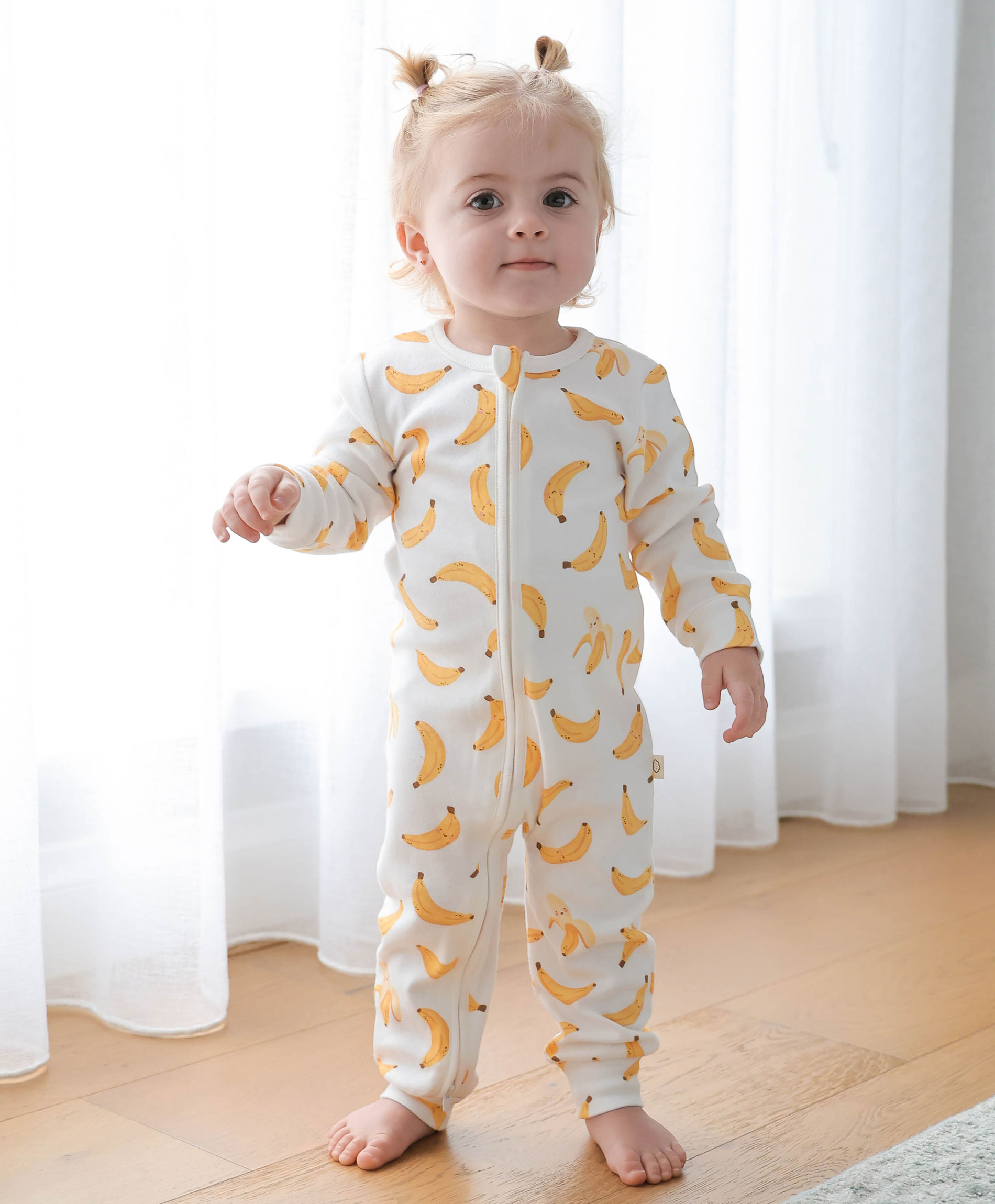
Banana print organic cotton baby onesie
- Organic Cotton Growsuit – Kangaroo & Koala
A distinctly Australian print that works well both as a daily essential and a thoughtful gift, the Organic Cotton Growsuit – Kangaroo & Koala is especially popular with families buying for overseas relatives who want something recognisably “Aussie”.
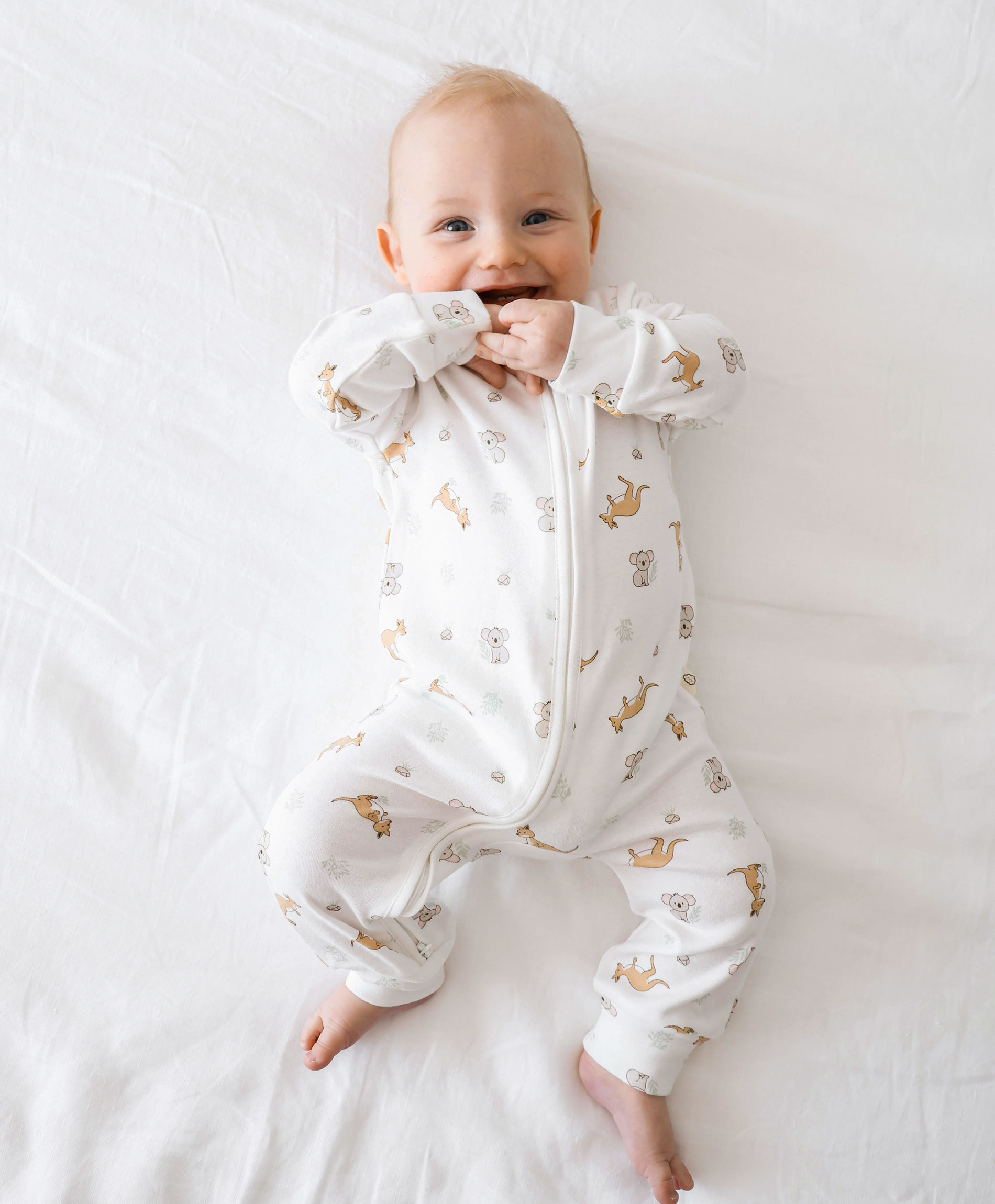
Kangaroo and Koala print baby onesie
- Organic Cotton Waffle Growsuit – Sage Green
A great option when you want a little extra warmth and texture. The Organic Cotton Waffle Growsuit – Sage Green has a slightly thicker feel than standard jersey, making it ideal for layering or slightly cooler days.
If you’d prefer to compare styles first, you can start with the Lūmmi growsuits collection, where zip onesies and everyday styles are grouped.
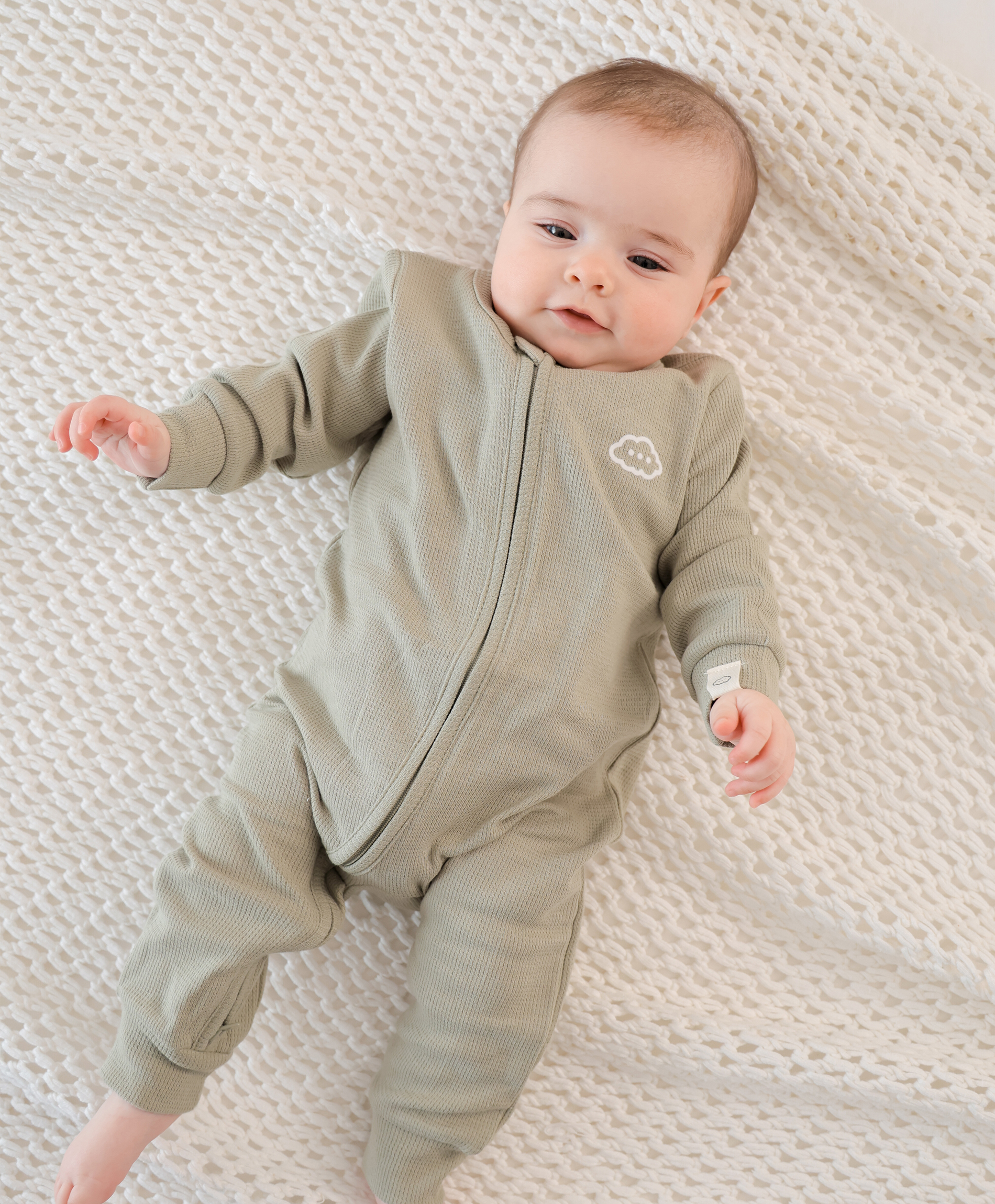
Sage green waffle baby onesie
Daily Care Tips to Make Onesies Last Longer
Even well-made babywear gets heavy use. A few simple habits can help keep onesies softer and in good shape:
- Wash on a gentle cycle with mild detergent
- Close zips before washing to reduce snagging
- Avoid very high heat drying where possible
- Rotate between several suits rather than relying on one repeatedly
- Store item by size so the next size up is easy to find
For broader wardrobe planning, this related article on how to plan and shop for baby clothes is a useful next read.
FAQ
Are onesies only for sleeping?
No. Many families use onesies for both daytime and sleep, adjusting layers based on temperature and season.
Is organic cotton better for sensitive baby skin?
Organic cotton is a popular choice because it is soft and breathable. Comfort also depends on fit, seams, and how you care for the fabric.
Two-way zip or snaps: which is easier?
Both can work, but many parents find a two-way zip faster during nappy changes, especially overnight.
How many onesies do I really need for a newborn?
A practical starting point is 5-7 in your current size and 2-3 in the next size. Adjust based on your laundry routine and how often changes are needed.
Should I buy all prints or all neutrals?
A balanced mix usually works best — neutrals for everyday wear and a few prints for variety, photos, or gifting.
Wrapping Up
Baby onesies are some of the most-used items in the early months, so quality really makes a difference day to day. Focus on breathable fabrics, easy zip access, gentle finishing, and a fit that allows movement. Keep your rotation simple, choose pieces that can handle frequent washing, and have the next size ready when you need it.
If you are building a practical starter set, Lūmmi’s Bananas, Kangaroo & Koala, and Sage Green waffle growsuits above are a great place to start — then explore the wider organic cotton growsuits collection and baby basics range to build a wardrobe that fits easily into your everyday routine.
Order my debut children's book
Greek Myths, Folktales & Legends for 9-12 year olds
Published by Scholastic. Available on Amazon
